Kakehashi Project Program
Sunday, May 17th, 2026, 4:00-7:00 pm, Kensington Community Center (59 Arlington Ave)
Pop-up Performances / 4:00-6:00 pm
Cole Sass
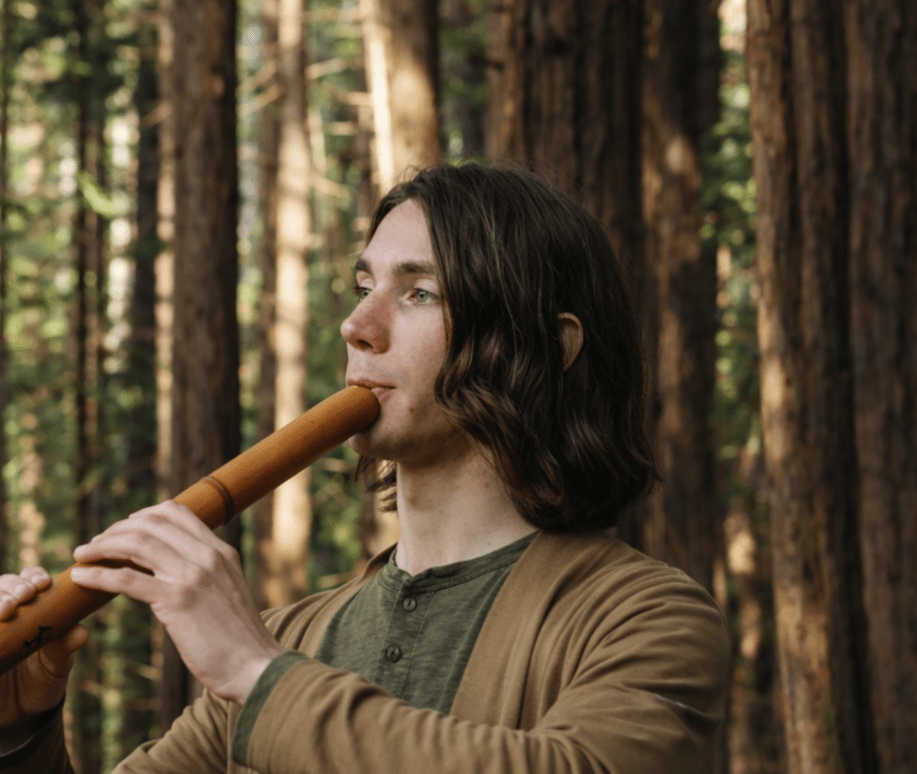
Cole Sass is a Junior year student at UC Berkeley studying music composition. The Shakuhachi was my first instrument, and I have now been playing for over 10 years. I recently received my Associate Master (Jun-Shihan 準師範) certificate in the Dokyoku Shakuhachi lineage. I want to contribute to a healthy and vibrant Shakuhachi community which fosters creative and active players.
Kohtaro Yamakawa
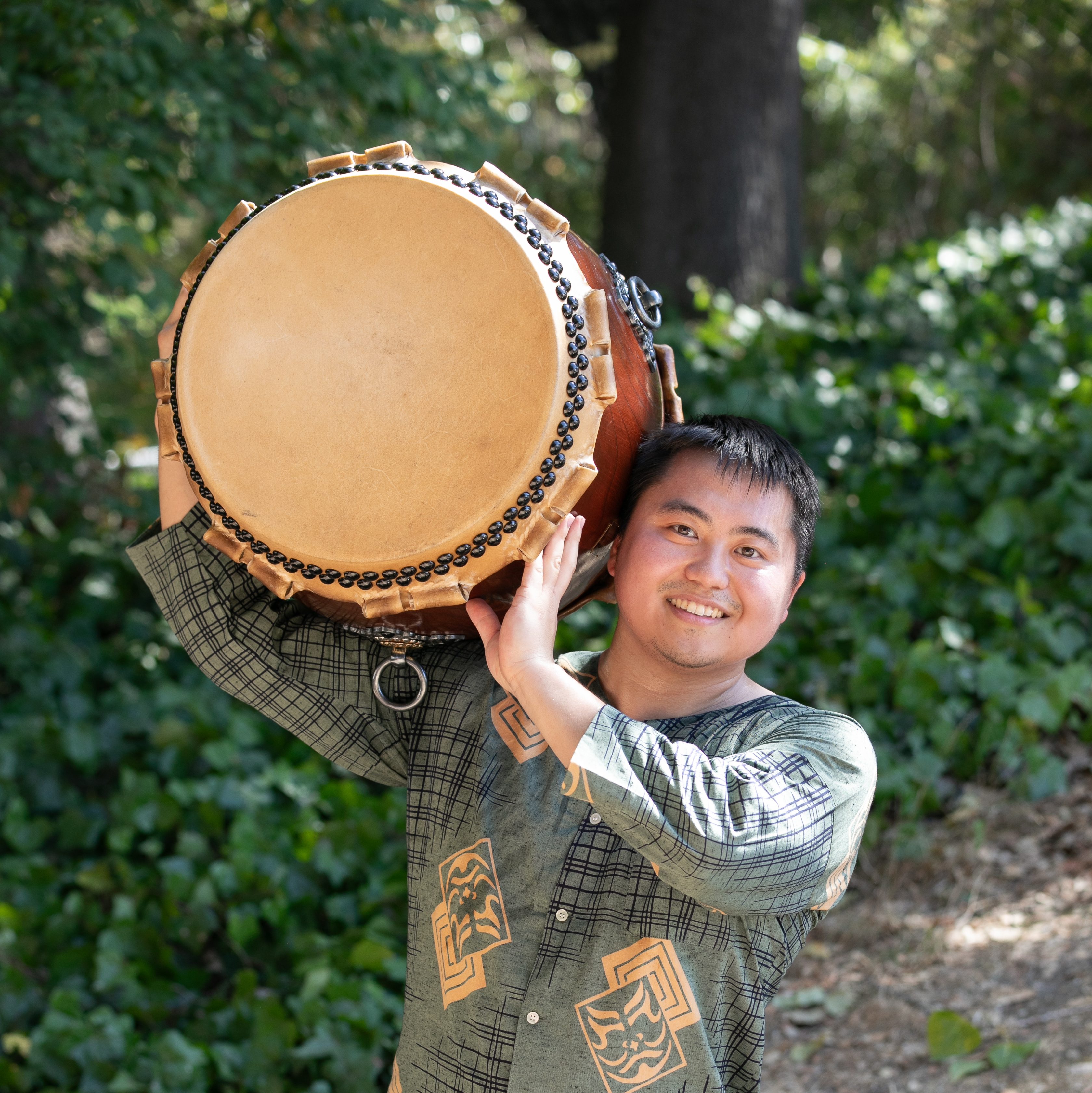
Kohtaro Yamakawa is a taiko performer and disciple of legendary taiko master Eitetsu Hayashi His artistry blends technical mastery with a deep respect for the cultural traditions of taiko, bringing both energy and authenticity to this collaboration.
Kirin Chanteloup
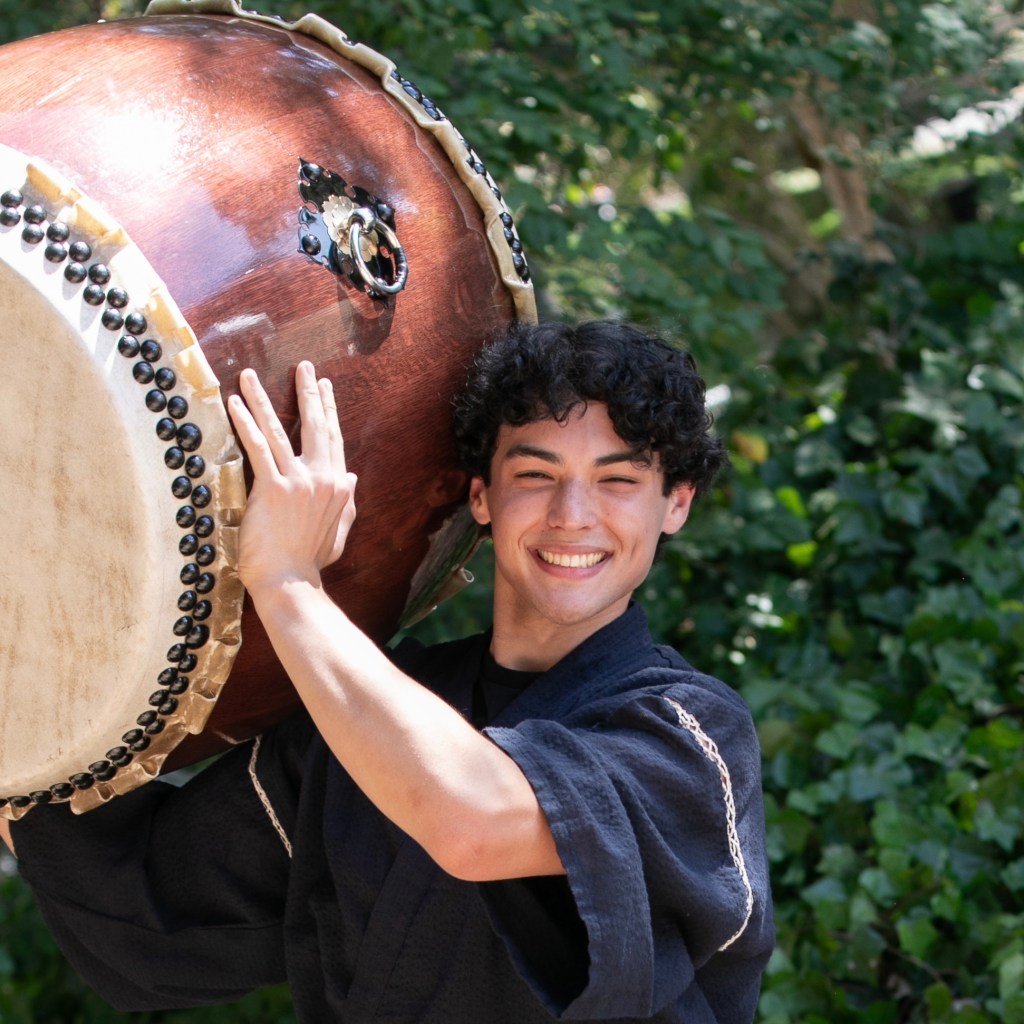
Kirin Chanteloup is a performing member of both San Francisco Taiko Dojo and Cal Raijin Taiko of UC Berkeley. Since joining SF Taiko Dojo in 2010 and developing his style through years of training with Grandmaster Seiichi Tanaka, he has traveled the country to perform and promote the art form.
Brian Mitsuhiro Wong
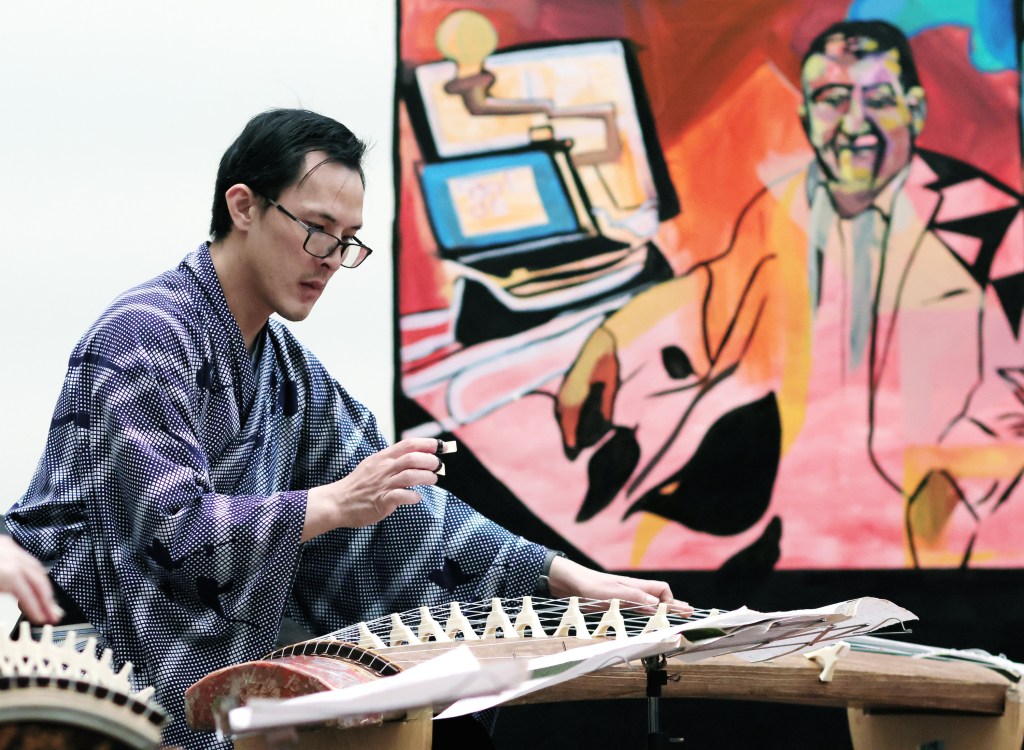
Brian Mitsuhiro Wong is a 3rdgeneration koto musician and teacher. He is a proud Oaklander and graduated with his teaching degree from the Sawai Koto School in Tokyo and a Student Teaching degree from the Chikushi School in Fukuoka. He also plays shakuhachi-bamboo flute and shamisen-3 string lute. Brian enjoys playing traditional, jazz, pop, and arranging music.
String Orchestra Performance / 6:00 pm
Violins
Jackson Snead, Sharon Williams, Renata Norcia, Kana Luzmoor, Brooke Aird, Clara Schuur
Viola
Melissa McGlumphy, Ella Hammersly, Taylor Cooksy-Nguyen
Cello
Laura Robb Martin Elmer Carter Natalie Lin
Bass
April Xuan Nguyen
Conductor
Ryan Villahermosa
Young People’s Symphony Orchestra Participants
Dason Deng, Matthew Aganon, Catalina Kaye-Hsu, Dyson Kobayashi, Victor Chen
Matsuri by Koharu Sakiyama
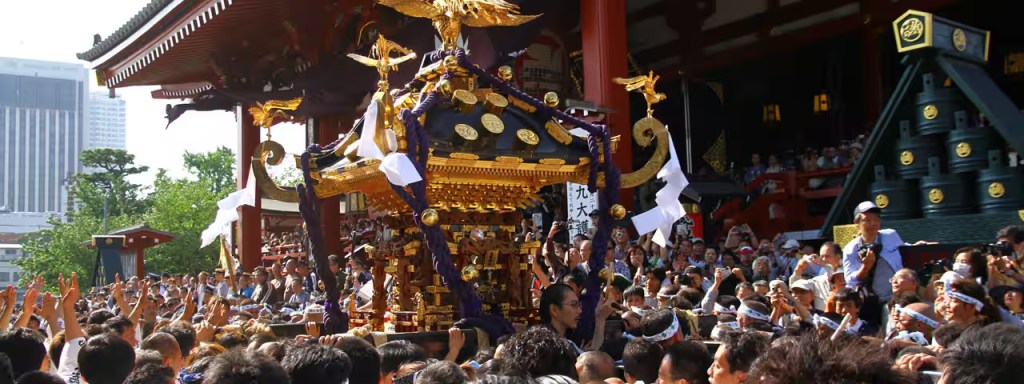
Matsuri translates to “festival” in Japanese. Dedicated to my grandfather, this piece depicts a day at the summer festivals in Japan he used to take me to throughout my childhood. Originally written for full symphony orchestra, this
arrangement is written for the 2026 Kakehashi Project performance, commissioned by Kana Luzmoor.
- Omikoshi (Portable Shrine)
The suite opens with a short prelude, setting a city scene before the festival begins with violins mimicking a car horn and the typical beeping sound of the traffic signals in Japan. The ostinatos depict various chatter of the crowd
gathering. As the taiko drums and shakuhachi gradually come closer, people carrying the Omikoshi (portable sacred shrine) near the crowd. At the climax, a traditional celebratory chant (“wah shoi!”) joins in before the group once again disappears into the distance. - Kingyo Sukui (Goldfish Scooping)
“Kingyo Sukui” is a classic activity present at every Japanese festival. At the station, children use small, paper nets to scoop live goldfish out of a tub of water. This movement opens with the rippling effect of water,
followed by a a playful melody in the first violins. A slightly mysterious melody in the cello and bass follows, depicts the child waiting to scoop the fish. After a suspenseful build up, the child is met with disappointment as the goldfish narrowly escapes. The return of the first theme then leads to a second climax, where the fish is successfully caught. - Yakisoba
The opening of the movement represents the chopping of vegetables in preparation for making the yakisoba, depicted by the taiko drum rim mimicking a cutting board. As the ingredients are scraped off of the cutting
board, they begin to gradually sizzle on the hot plate. The sizzling becomes louder as more ingredients are added and the temperature rises. The movement closes as the yakisoba, now ready to serve, is sprinkled with a final shake of seasoning. - Shaved Ice
The shaved ice station now comes into view as sharp harmonics introduce this popular dessert. Under the sweet, lyrical melody, the constant 16th-note motive in the upper violins represent the crystal ice shavings. This short movement ends with a brain freeze depicted by ending harmonics. - Yo-yo
At Japanese festivals, yo-yos are made of water balloons with short, rubber strings attached. Children use the ends of paper clips to retrieve the yo-yos out of a tub of water. The eighth-note ostinato that is traded throughout the
movement depicts the bouncing of the yo-yo, and the rapid key changes and polytonality represent the multitude of colors and patterns this simple toy comes in. A quick build up leads to the yo-yo breaking, followed by a whooshing sound to depict the sound of the yo-yo rapidly losing air. A solemn variation of the original theme is quickly replaced by a cheerful tone as the child successfully retrieves a second yo-yo. - Hanabi (Fireworks)
The end of the day is signified by the starting of the fireworks show. The taiko drums mimick the sound of the fireworks. As a kaleidoscope of bright colors fill the darkening sky, the fireworks then transition into a cascade,
commonly referred to as “Niagara” in Japan. This magnificent display of fireworks closes the night as the day at the festival comes to an end.
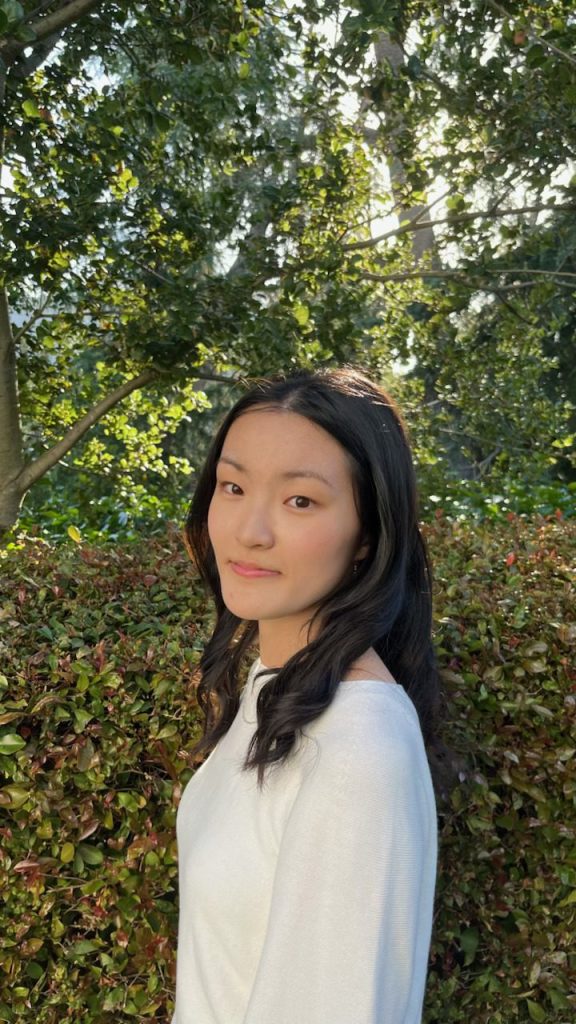
Koharu Sakiyama is a composer and baroque violinist. She has previously studied composition with Molly Axtmann, Prof. Michael Johanson, and Prof. Robert Yamasato. Her works have been performed by numerous groups including the Chamber Music Northwest Young Artist Institute, University Baroque Ensemble at UC Berkeley, chamber groups of the UC Berkeley Symphony Orchestra, Fear No Music’s Young Composers Project, Portland Youth Philharmonic, Metropolitan Youth Symphony, as well as a koto solo performance in Tokyo.
She has also won numerous awards for her compositions, including honorable mention in the 2018 National Association for Music Education Composers Competition, Co-Champion for the 2021 OMEA State Composers Contest, runner-up in the 2021 Hayes School of Music National Composition Contest, and Co-Champion for the 2022 OMEA State Composers Contest (for her symphony work “Matsuri” which was re-orchestrated for the Kakehashi Project). In addition, Koharu has been a baroque violinist in the University Baroque Ensemble at UC Berkeley for over three years, and enjoys playing the koto, a traditional Japanese instrument. Outside of music, she enjoys hiking and traveling.
Unfinished Painting by Lisa Yoshida
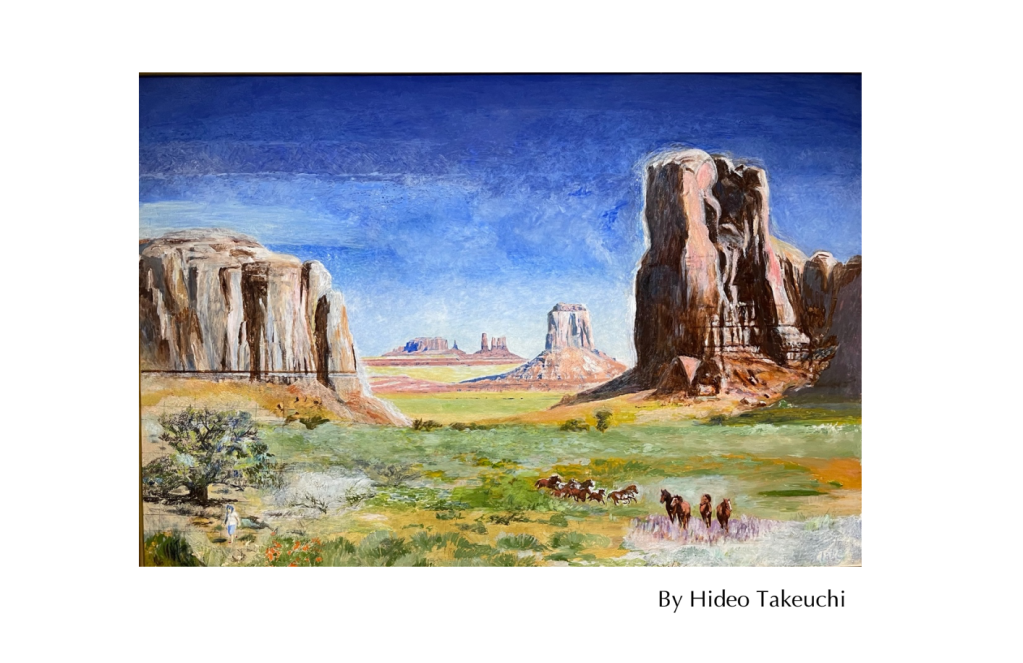
Unfinished Painting is a piece dedicated to my grandpa. This painting (cover page) of Monument Valley is on a massive canvas, and he worked on it since I was in elementary school (2006) to until about 2021. It’s also a memoir of our family trip there. With his illness, he was unable to finish the painting, hence the title of this string orchestra piece.
Every summer when I visited my grandparents in Japan, I was always intrigued by the little details my grandpa changed in this painting. One year, he added horses in the bottom right after I told him the story of how jealous I was
that only the adults were able to ride the horses. A few summers after, I came back and was surprised to see he added me in the bottom left corner. My grandma told me the strokes of the sky have multiple hidden layers of paint
until he got it “just right”. Watching my grandpa add details at his own discretion helped me realize the freedom in art. As a child and artist in
training, getting to visit this living painting every summer has taught me the love, patience, responsibility, and hard
work an artist must bring into their works.
I remember asking him one summer, “Grandpa, when will you be finished with
this painting?” to which he chuckled, “I don’t think I’ll ever be, haha!” This string orchestra piece goes through a meditative opening that recalls the memory of our family trip to Monument Valley, and journeys through the idea of “Americana”, specifically in the eyes of a grandpa watching his immigrant granddaughter grow up in a foreign country.
– Lisa Yoshida
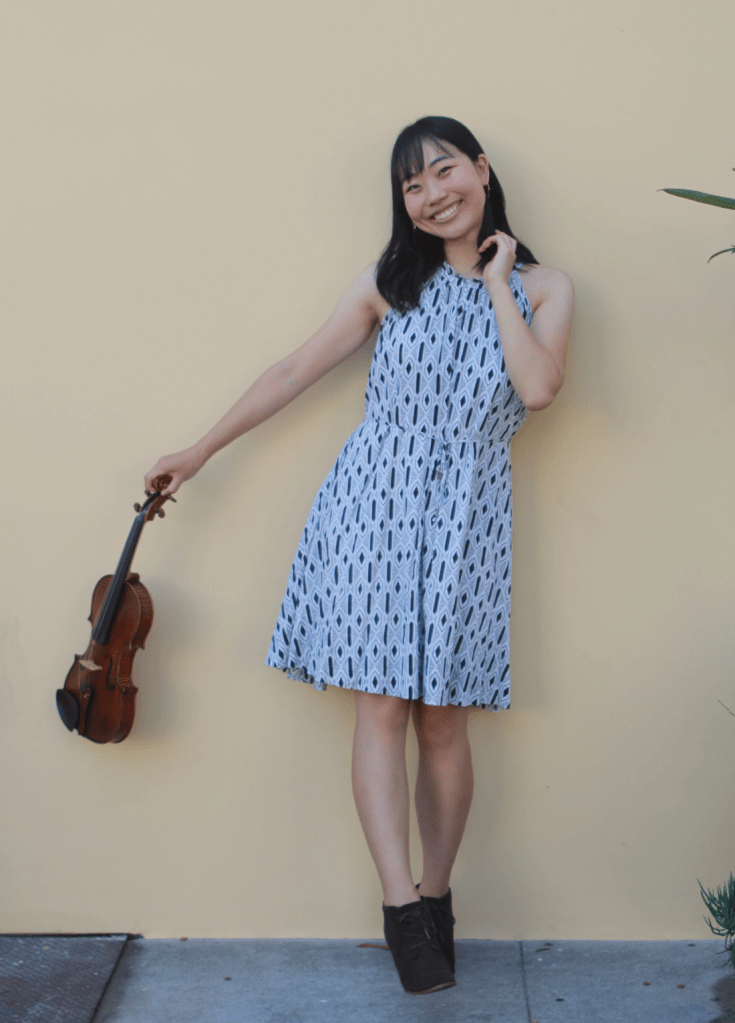
Lisa Yoshida is a violinist, composer, and educator in Orange County, CA, and is currently a PhD candidate in the Integrated Composition, Improvisation, and Technology program at the University of California Irvine. She is also the violinist of Calico Trio, with pianist Ashley Shahbazi and cellist Sebastian Lee.
She has participated in summer festivals such as Banff Centre for Arts and Creativity – Jazz and Sonic Arts Program, June in Buffalo, Domaine Forget’s New Music Program, Nief-Norf’s Composer-Performer-Improvisor summit, and the Violin Studio at Internationales Musikinstitut Darmstadt. Her piece Hana no Tayori (2024) for piano trio, won a Merit Award for the 2025 Tribeca New Music 2025 Young Composer Competition. Commissions include “Unfinished Painting” for String Orchestra, conducted by Ryan Villahermosa for the 2022 Summer at the Hidden Cafe Music Festival in Berkeley, CA.
A graduate from California State University Long Beach with a Masters of Music in Violin Performance, she studied under Dr. Moni Simeonov and was the Strings Graduate Student Assistant and a member of the CSULB University String Quartet. Lisa has a Bachelor of Music degree in Violin Performance and a French minor from Chapman University, where she studied with Prof. William Fitzpatrick. Outside of music, she enjoys rock climbing and watching baseball!
Heartbeats by Erika Oba
Featuring Taiko Artist, Koh Yamakawa
Heartbeats was inspired by the rich history of Japanese American civil rights activism. This piece pays tribute to figures such as Fred Korematsu, who resisted incarceration during WWII, Yuri Kochiyama, who was a fierce coalition builder during the Civil Rights Movement, and Nobuko Miyamoto, whose music and activism continue to ignite and inspire. Heartbeats honors these leaders and the many others who continue to fight for
justice in our communities.
– Erika Oba
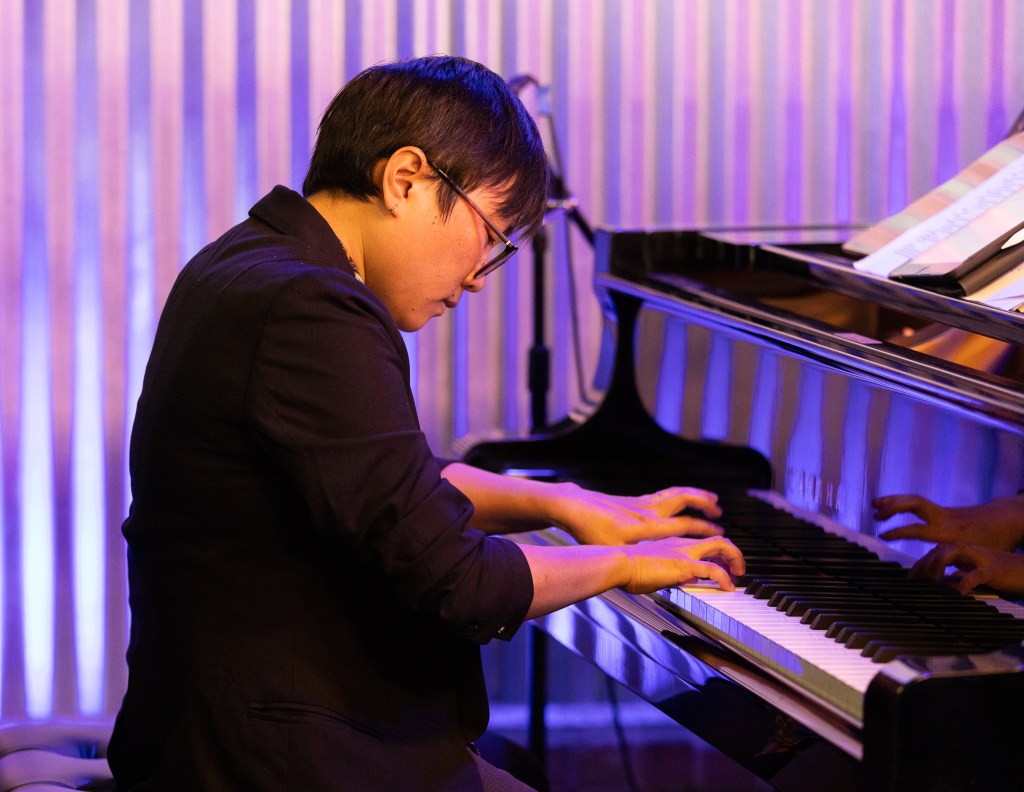
Erika Oba is a composer, pianist/flutist, and educator based in the SF Bay Area. As a composer she has written works for jazz ensembles, chamber groups, dance, and theater. She has been commissioned by groups such as the Del Sol String Quartet, Fresno Philharmonic, Shotgun Players, and Sharp and Fine. She is active as a performer on both piano and flute, and performs with her own groups the Erika Oba Trio, Rice Kings, and The Sl(e)ight Ensemble. She has performed in a wide variety of ensembles with musicians such as Meredith Monk, Peter Apfelbaum, Hitomi Oba, Lisa Mezzacappa, Jean Fineberg, Jon Jang, Francis Wong, and many other jazz and experimental musicians. In addition to her own private teaching studio, she is a private jazz piano instructor for UC Berkeley’s Music Department and a resident music director with Berkeley Playhouse’s Youth Conservatory Program.
Past artistic projects include a collaboration with choreographer Sammay Dizon, through the Red Poppy Art House’s inaugural Crossover Residency program in 2016. She was also a performer fellow with Giant Steps Music Action Lab in 2017, during which she collaborated with an international group of musicians and recorded the album What If. In 2018, she was a composer fellow with the Gabriela Lena Frank Creative Academy of Music and worked with the Del String Quartet. She was a 2023-24 fellow in the inaugural cohort of the Asian Improv Arts Fellowship program.
As an artist, she is interested in exploring cultural practice in diaspora, performance as ritual, and music as a vehicle for exploring our relationships to our communities, histories, and biosphere. She received her BM in Jazz Piano Performance from Oberlin Conservatory and her MA in Music Composition from Mills College.
Art Gallery
Featured Artists
Cuong Ta — www.cuongta.com
Manaeha Rao — @manaeha_mud_maker
Sophia Okada Callahan — sophiacallahan.com
Kayoko Tachibana — www.kayokodesigns.com
Nina Tran — ninatran.site
Trisha Mah — www.trishamah.com
Rumi Nguyen — @rqn.room
Stacy Phan — @dep.clay
Lys Yang — @sendoodz
Eiko Nishida — www.eikonishida.work
 Collective Counterpoint